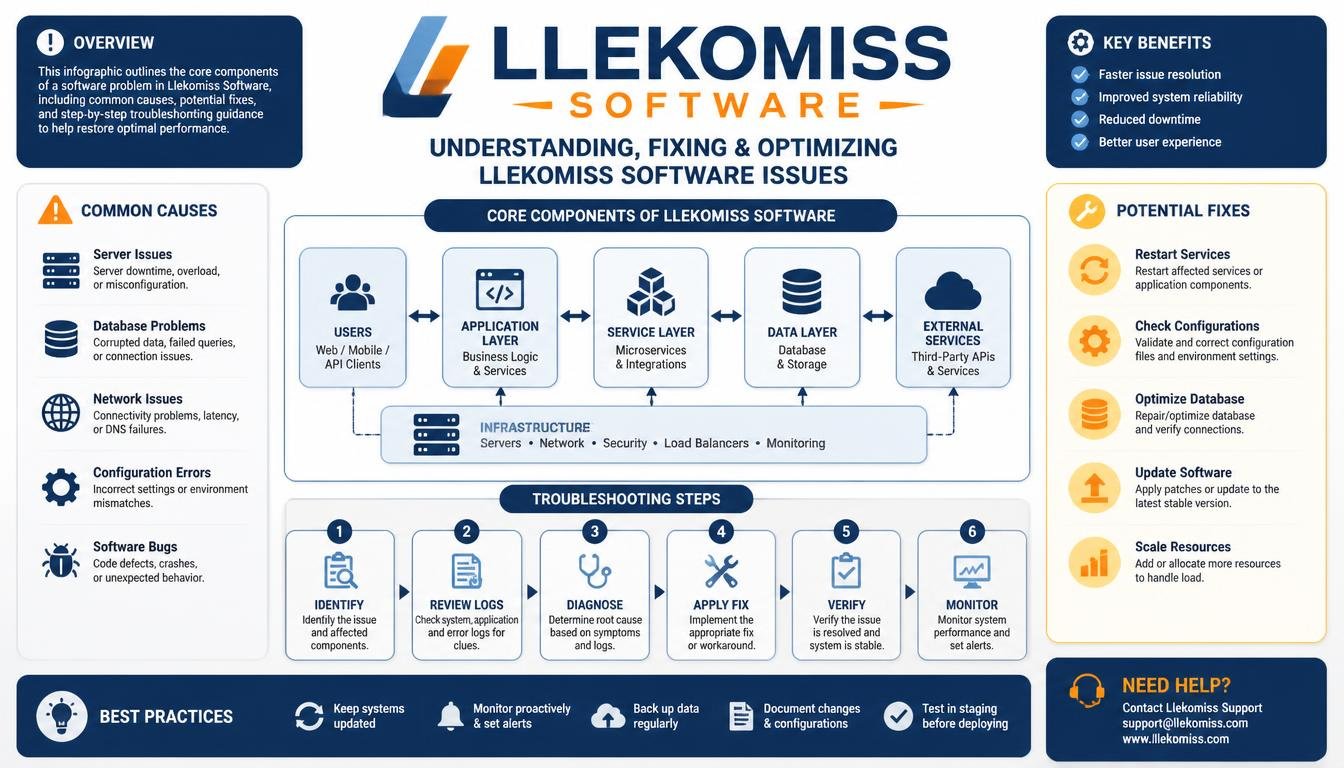
Problem on Llekomiss Software: Causes, Fixes, and Troubleshooting
Experiencing a persistent problem on Llekomiss software can be frustrating for any user relying on its functionality for daily tasks. Whether you are dealing with unexpected crashes, slow performance, or installation errors, identifying the root cause is the first step toward a stable system. This article provides a clear roadmap to help you diagnose and resolve these technical hurdles effectively.
By following these structured troubleshooting steps, you will learn how to stabilize your environment, manage system files, and ensure your software runs at peak efficiency. Understanding how to address these common digital bottlenecks will save you time and prevent future technical headaches.
Identifying Common Triggers for Software Instability
Most users encounter a problem on Llekomiss software due to conflicting background processes or outdated components. When your operating system attempts to manage multiple applications simultaneously, resource competition often leads to memory leaks or unexpected shutdowns.
You should first verify that your machine meets the minimum hardware requirements specified by the developers. If your RAM or processor is consistently running at high capacity, the application may struggle to execute even basic commands.
Another frequent cause involves corrupted installation files that prevent the program from launching correctly. This often happens if an update was interrupted or if a security application flagged a necessary file as a threat.
You can check the integrity of your files by looking for missing DLLs or incomplete directory structures within the program folder. In many cases, a simple reinstallation can replace these damaged components and restore normal function.
Compatibility issues with your current version of Windows also play a significant role in system instability. Software developers frequently release patches to bridge the gap between their platform and newer OS builds.
If you have recently performed a major system upgrade, your existing software configuration might be misaligned with the new environment. Checking for official updates is the most reliable way to ensure that your tools remain compatible with the latest security and performance standards.
Step-by-Step Troubleshooting for Startup Failures
When the software refuses to open, the issue often lies in a blocked initialization sequence. Start by checking your Task Manager to see if a ghost process is already running in the background.
If you see a stalled instance of the program, right-click it and select “End Task” to clear the memory. Once the system is clean, attempt to launch the application again as an administrator to grant it the necessary permissions.
If the problem persists, consider the impact of your firewall or antivirus software. Sometimes, security protocols are overly restrictive and prevent the software from connecting to its required servers or local databases.
You can temporarily disable your security suite to see if the program launches successfully. If it does, you must add an exception for the software executable in your security settings to prevent future blocks.
Corrupted user preferences can also prevent a successful startup. Many programs store configuration files in hidden folders like AppData, which can become bloated or damaged over time.
Deleting these temporary preference files forces the software to generate a fresh, clean configuration upon the next launch. This process is often safer than a full reinstallation and frequently resolves stubborn startup loops.
Optimizing Performance and Reducing Lag
If the software is running but remains sluggish, you likely have a resource management issue on your hands. Start by closing unnecessary browser tabs and background applications that consume significant CPU cycles.
It is also helpful to review your startup items, as too many programs launching at once will choke your system resources. Using a tool like the Microsoft Sysinternals Autoruns utility can help you identify and disable non-essential background tasks that drain performance.
Disk fragmentation or slow drive read speeds can also impact how quickly the software loads heavy assets. If you are still using a traditional mechanical hard drive, the software may struggle to pull data quickly enough to maintain smooth operation.
Switching to a solid-state drive (SSD) is one of the most effective ways to improve the responsiveness of complex applications. Even on an SSD, ensuring you have at least 15% of your total storage capacity free will allow the system to manage temporary files without stuttering.
Finally, consider the impact of hardware acceleration settings within the software itself. While these features are designed to improve performance, they can sometimes cause visual glitches or crashes if your graphics driver is outdated.
Toggle the hardware acceleration setting off in the program’s options menu to see if it stabilizes the experience. If the performance improves, you should then focus on updating your dedicated GPU drivers to the latest stable release.
Read More: How Mogothrow77 Software Is Built: Architecture, Source and Installation
Managing Updates and Security Patches
Maintaining current software versions is critical for both security and functionality. Developers release updates to fix bugs, patch security vulnerabilities, and optimize how the code interacts with the operating system.
If you are running an outdated version, you might be missing out on vital stability improvements that fix the very problem on Llekomiss software you are currently experiencing. Always check the official website or the built-in update tool before attempting manual repairs.
Security patches are particularly important because they often address back-end communication issues that can cause an application to hang. If the software requires a server handshake to verify a license or sync data, an outdated security certificate can result in a connection error.
Ensuring your system clock is set to the correct date and time is a surprisingly common fix for these handshake failures. If the clock is off, the encrypted connection will fail every time.
Be cautious when downloading updates from unofficial third-party repositories. These sources often bundle unwanted software or malware that can cause more issues than they solve.
Always stick to the official vendor channels to ensure the integrity of your update files. If an official update is not available, check the developer’s support forums to see if other users are reporting similar issues and whether a community-verified workaround exists.
Comparison of Common Software Issues
To better understand the range of potential technical hurdles, it helps to categorize them by their symptoms and likely origins. This table outlines the most frequent scenarios users encounter when dealing with software errors.
| Symptom | Likely Cause | Primary Fix |
|---|---|---|
| Application won’t launch | Corrupted executable | Reinstall from source |
| Severe lag or freezing | Insufficient RAM/CPU | Close background tasks |
| Feature missing/Error code | Outdated version | Run software update |
| Connection timeout | Firewall/Security block | Add program exception |
Essential Maintenance Practices
Consistent maintenance is the best defense against recurring software problems. You should establish a regular schedule to clear your cache and temporary files, which prevents system clutter from interfering with application performance.
Most software packages have a built-in “clear cache” or “reset” button in their settings. Utilizing this feature once a month is a proactive way to keep the application running smoothly.
Monitoring your system logs can also provide early warnings before a major crash occurs. Windows Event Viewer is a powerful tool that records errors and warnings generated by programs.
If you notice a specific error code appearing consistently before a crash, searching for that code online will often lead you directly to a known fix. This is much faster than guessing which component is failing.
Keep a record of the changes you make to your system configuration. If you install a new driver or update a plugin, note the date and the version.
If a problem arises shortly after, you will know exactly which change to revert. This systematic approach turns troubleshooting from a guessing game into a logical process of elimination.
Troubleshooting Network-Dependent Features
Many modern applications rely on cloud connectivity to function, which introduces a new layer of potential failure. If your software requires a constant internet connection, a drop in bandwidth or a DNS error can cause the interface to hang.
Start by testing your connection with a simple browser ping to ensure your ISP is delivering a stable signal. If your internet is fine, the issue might be a local DNS cache that needs flushing.
You can flush your DNS cache by opening the command prompt and typing “ipconfig /flushdns”. This clears out old network paths that might be leading to dead servers.
Additionally, if you are using a VPN or proxy server, try disabling it to see if it is interfering with the software’s communication protocols. VPNs often route traffic through congested nodes that can cause latency-sensitive applications to time out.
If the software still struggles to connect, check if your router has any Quality of Service (QoS) settings enabled. QoS features prioritize certain types of traffic, and they might be inadvertently throttling your software’s data packets.
Adjusting these settings to give your application higher priority can often resolve persistent connection drops. Always remember to save your router settings before applying any changes.
Frequently Asked Questions
Why does my software crash only when I perform specific tasks?
Crashes during specific tasks usually indicate a conflict with a specific module or feature of the program. This often happens if the software is trying to access a hardware component, like a GPU or a specific file directory, that is currently locked or incompatible. Try disabling the specific feature causing the crash in the settings menu or updating the associated hardware driver.
Is it safe to delete the AppData folder for the software?
You should generally avoid deleting the entire folder, but it is safe to delete the specific sub-folder associated with the software. This folder contains user-specific settings, temporary files, and cache data. Deleting it will reset the software to its default state, which is often necessary to fix persistent configuration errors.
How do I know if the problem is my computer or the software itself?
The easiest way to check is to try running the software on a different machine with a similar operating system. If the software works fine on another computer, the problem is likely a local conflict on your primary machine. If it fails on both, the issue is likely a bug within the software that requires an update from the developer.
What should I do if the official support team doesn’t respond?
If official support is slow, check the company’s community forums or social media pages. Often, other users have already found a workaround for the issue you are experiencing. You can also look for “unofficial” guides or patches, provided they come from reputable, long-standing community members rather than suspicious download sites.
Can a Windows update break my software?
Yes, major Windows updates can sometimes change how the operating system handles permissions or system calls. If your software suddenly stops working after an update, check the developer’s website for “known issues” related to the latest Windows version. In some cases, you may need to run the software in “Compatibility Mode” to bypass these changes.
Final Thoughts on System Stability
Resolving a problem on Llekomiss software requires a blend of patience and systematic testing. By methodically checking your installation files, managing background processes, and ensuring your drivers are up to date, you can typically restore full functionality without needing advanced technical skills. Remember that most issues are caused by simple conflicts that are easily cleared once identified.
Keeping your environment clean and your software updated remains the best strategy for long-term reliability. If you continue to face difficulties, don’t hesitate to reach out to official support channels with the specific error codes you have documented. With a clear approach, you can get back to your work efficiently and keep your digital tools running exactly as they should.



One Comment