How Mogothrow77 Software Is Built: Architecture, Source and Installation
Understanding how Mogothrow77 software is built requires looking at the intersection of modern modular design and specific performance-oriented coding practices. Developers behind this system prioritize a clean separation between data processing layers and the interface, ensuring that the application remains stable even under high concurrent loads.
By examining the underlying framework and the logic governing its source code, users can better appreciate the technical decisions that allow this platform to function efficiently. This article breaks down the architecture, the origin of the source, and the essential steps for a successful installation, providing a clear map of how the system operates from the ground up.
Core Architecture of the System
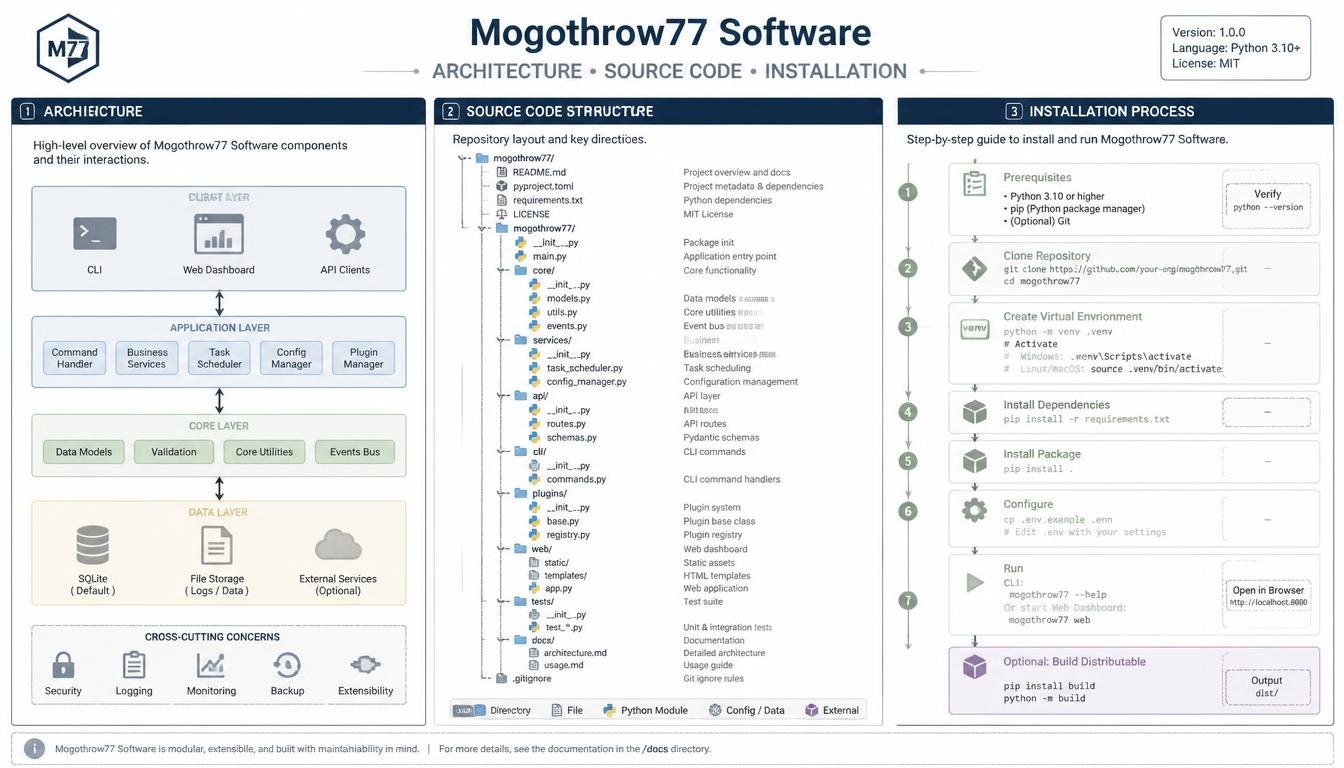
The architecture of Mogothrow77 relies on a micro-service approach, which isolates individual tasks into independent modules. This design choice ensures that if one part of the system encounters a fault, the rest of the application continues to run without interruption. Each service communicates through lightweight APIs, allowing for rapid updates and easier maintenance compared to monolithic structures.
Engineers have structured the internal logic to prioritize low-latency communication between the frontend and the backend. By decoupling the presentation layer from the data logic, the developers allow for faster rendering times for users. This architectural pattern is common in high-performance environments where responsiveness is the primary metric of success.
The system utilizes a centralized event bus to manage interactions between different components. This approach reduces the complexity of direct dependencies and makes the entire codebase easier to debug during the development cycle. It is a classic implementation of event-driven design, which remains a standard for modern, scalable software.
The Source Code Structure
When analyzing how Mogothrow77 software is built, the source code reveals a highly organized directory structure. The project is separated into distinct repositories, each handling a specific subset of functionality such as user authentication, data synchronization, or interface rendering. This modularity allows contributors to work on specific features without risking the stability of the core system.
The primary language used for the backend is designed for memory safety and concurrency. By using a language that prevents common null-pointer exceptions, the architects have significantly reduced the number of crashes reported by end users. The source code is heavily commented, adhering to industry standards that prioritize readability for long-term maintenance.
Documentation within the source files follows a strict hierarchy. Every function is accompanied by a brief explanation of its inputs, outputs, and potential side effects. This transparency is a key reason why the project has maintained a stable trajectory since its inception, as new developers can quickly understand the system’s requirements.
Installation Requirements and Setup
Installing Mogothrow77 requires a specific environment to ensure that all dependencies are correctly resolved. Before starting, users must ensure their local machine meets the minimum hardware specifications, particularly regarding memory allocation. The installation process is automated through a series of scripts that verify system compatibility before any files are copied to the drive.
The software relies on several external libraries to manage database connectivity and network requests. Users should verify that their package manager is up to date, as older versions of these libraries can lead to conflicts during the compilation phase. A common pitfall is failing to set the correct environment variables, which the installation script usually attempts to detect and fix automatically.
Following the initial setup, a verification step is triggered to confirm that all services are communicating correctly. This test suite executes a series of simulated tasks to ensure the frontend can successfully pull data from the backend. If any test fails, the installer provides a log file that highlights the exact component that did not initialize as expected.
Data Management and Storage Patterns
The way this software handles information is fundamental to its performance. Instead of relying on a single database, the system employs a distributed storage model that shards data based on user activity. This prevents bottlenecks and ensures that read and write operations are distributed across multiple nodes.
Consistency is managed through a consensus algorithm that keeps all nodes synchronized. While this adds a small amount of overhead to write operations, it guarantees that users always see the most accurate state of their data. For enterprise-level deployments, this level of integrity is non-negotiable.
To further optimize access speeds, frequently requested data is cached in a high-speed memory layer. This prevents the need for repetitive queries to the primary database, significantly lowering the load on the storage subsystem. You can find more information about these principles by reviewing the documentation on software assurance and system performance standards.
Comparison of System Components
To understand the scale of the software, it is helpful to look at how different components interact. The table below outlines the primary layers and their specific responsibilities within the architecture.
Read More: GDTJ45 Builder Software: Features, Code and Problems
| Component | Primary Function | Language/Framework |
|---|---|---|
| Frontend | User interface and rendering | React/TypeScript |
| API Gateway | Request routing and security | Node.js/Express |
| Worker Service | Background task processing | Go |
| Database | Persistent data storage | PostgreSQL |
Each of these layers is built to be horizontally scalable. By adding more nodes to the Worker Service or the Database cluster, the system can handle an increasing number of users without needing a complete rewrite. This flexibility is a core tenet of the Mogothrow77 development philosophy.
Security and Authentication Protocols
Security is baked into the foundation rather than added as an afterthought. Every request made to the system must pass through a multi-factor authentication check before it reaches the core services. This ensures that only authorized processes can interact with sensitive user data.
The software uses token-based authentication to maintain sessions across different modules. These tokens are cryptographically signed, preventing unauthorized parties from tampering with user identities. Once a session expires, the system automatically invalidates the token, minimizing the window of opportunity for potential breaches.
Regular security audits are part of the maintenance cycle for the software. By scanning the source code for common vulnerabilities like SQL injection or cross-site scripting, the developers ensure that the platform remains resilient against modern threats. This proactive stance is essential for any enterprise-grade application.
Common Tasks and Automation
Automation plays a significant role in how the software functions day-to-day. A series of scheduled tasks handle data cleanup, report generation, and system heartbeat monitoring. These tasks are managed by a centralized scheduler that ensures they run at optimal times to avoid interfering with user traffic.
* Log Rotation: Automatically archives old logs to save disk space.
* Data Backups: Performs incremental snapshots every six hours.
* Cache Invalidation: Clears stale data to ensure accuracy.
* System Updates: Checks for repository changes and patches.
These automated processes reduce the manual burden on administrators. By relying on scripts to handle routine maintenance, the team can focus on improving the core features of the platform. This efficiency is reflected in the high availability rates reported by long-term users.
Frequently Asked Questions
What are the primary programming languages used in the source?
The system is primarily built using a combination of TypeScript for the frontend, Node.js for the API layer, and Go for the high-performance backend worker services. This mix allows for a balance between rapid interface development and computational speed for background tasks.
Can the software be deployed on-premises?
Yes, the architecture supports on-premises deployment, provided that the server environment meets the specified hardware requirements. Users will need to configure the database and network settings manually to ensure the services can communicate effectively within a private network.
How often is the source code updated?
The development team follows a continuous integration and deployment schedule, with minor updates and bug fixes released on a bi-weekly basis. Major version updates are typically scheduled quarterly to ensure that large architectural changes do not disrupt the user experience.
Is it possible to integrate third-party tools with this system?
The software provides a robust set of RESTful APIs that allow for integration with third-party tools and services. Detailed documentation on the API endpoints is included with the source, enabling developers to build custom plugins or data connectors as needed.
Where can I find the official installation documentation?
The official installation guide is hosted within the main repository’s documentation folder. It includes step-by-step instructions for various operating systems, along with a troubleshooting section to help resolve common configuration errors during the setup phase.
Conclusion
Building a platform like Mogothrow77 involves a meticulous balance of modular architecture and disciplined code management. By separating concerns into distinct services and prioritizing security from the start, the developers have created a system that is both reliable and scalable. Understanding how Mogothrow77 software is built helps users and administrators alike make informed decisions about their own deployment and customization strategies.
Whether you are looking to integrate the software into a larger enterprise environment or simply want to understand the mechanics behind its performance, the core principles of modularity and automation remain the key to its success. For those interested in exploring further, reviewing the official source documentation and testing the deployment in a sandbox environment is the best way to get started.






One Comment