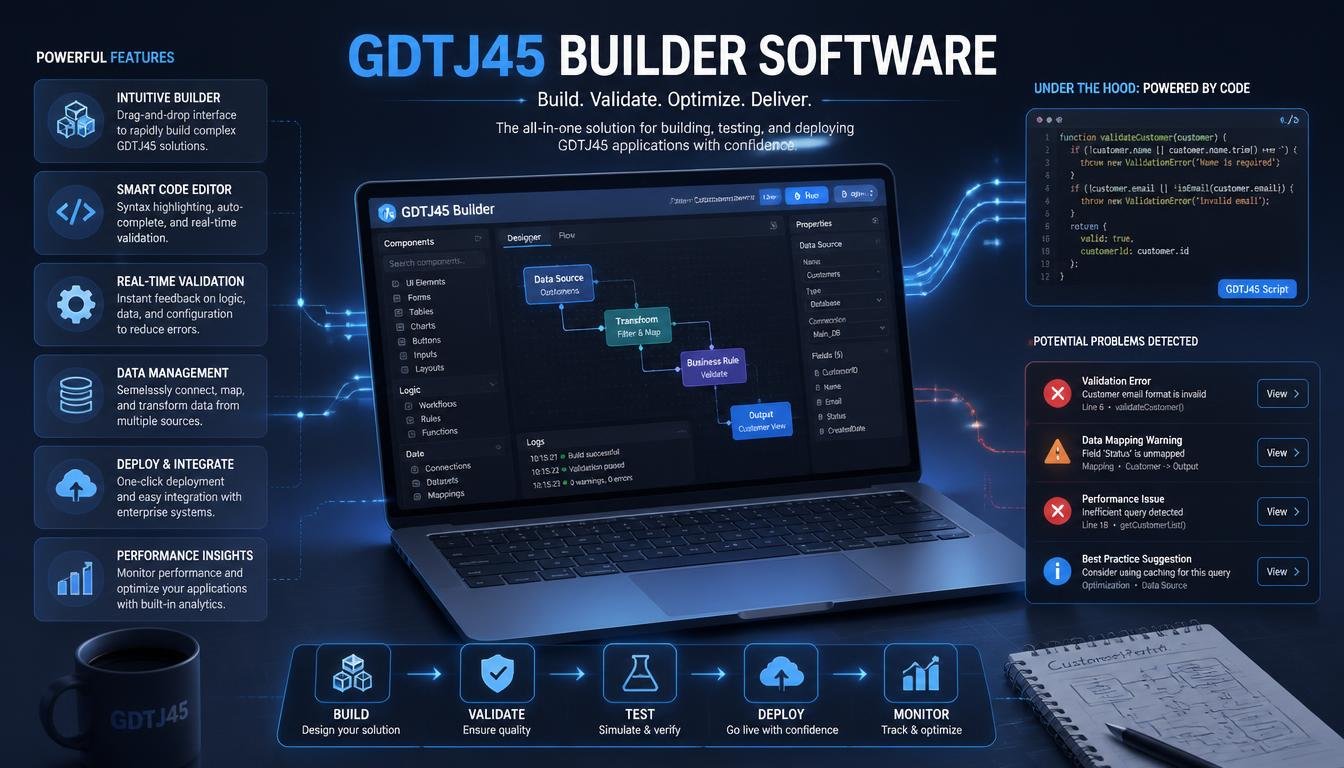
GDTJ45 Builder Software: Features, Code and Problems
GDTJ45 Builder Software serves as a specialized tool for developers and project managers looking to streamline complex construction-related workflows. By integrating specific data management features with automated code generation, it attempts to solve the common issue of fragmented project tracking. Many users turn to this system when they need to bridge the gap between architectural blueprints and granular site management.
Understanding the core capabilities of this tool requires a look at how it handles project data and where its technical limitations often surface during deployment. This article explores the realities of using the platform, from its primary functions to the frequent hurdles encountered during implementation.
Core Features of the Platform
The primary appeal of GDTJ45 Builder Software lies in its ability to centralize project data into a single, cohesive interface. Users typically leverage the software to manage material lists, track timelines, and coordinate communication between different teams. The platform is designed to handle high-volume data inputs, which is essential for large-scale construction projects that require constant updates.
One standout feature is the automated reporting module. This tool allows project leads to generate status updates without manual entry, pulling directly from the input logs. By reducing the time spent on administrative tasks, the software aims to keep teams focused on physical site operations.
Another key component is the document storage system. It supports various file types, ensuring that blueprints, contracts, and safety permits are accessible in one location.
This level of organization is often cited as the main reason firms adopt the system. When teams use the platform to its full potential, they often report a significant decrease in version control errors.
Analyzing the Underlying Code
At its core, the code architecture of GDTJ45 Builder Software is built on a modular framework. This design choice allows for some level of customization, though it requires a developer who understands the underlying language. The logic is primarily segmented into data ingestion, processing, and output layers.
The data ingestion layer is responsible for sanitizing inputs from various sources. This is critical because inconsistent data can lead to errors in the reporting module later on. When the code handles these inputs successfully, the system remains stable under heavy usage.
However, the complexity of the codebase can be a double-edged sword. While it provides deep functionality, it also creates a steep learning curve for those not familiar with its specific syntax. If you are looking for more information on how software architecture impacts construction management, you can check out the Building Technology Research Program at NIST for further context on industry standards.
Read More: Update Dorgenven Version: Release Date and Safe Update Guide
Common Problems and Technical Hurdles
Despite its benefits, many users encounter specific challenges when integrating the software into their existing workflows. One of the most frequently reported issues involves the synchronization speed between the mobile app and the desktop version. Delays in data reflection can cause confusion on site, especially when multiple teams are updating the same project simultaneously.
Compatibility is another hurdle that often frustrates new users. The software does not always play well with legacy systems, requiring significant manual data migration. This process can be time-consuming and prone to errors if not handled by a technical expert.
There are also concerns regarding the user interface, which some find overly dense. For teams that need a quick, intuitive tool, the sheer volume of menus and options can feel overwhelming. This often leads to underutilization, where teams only use a fraction of the available features.
Performance Comparison
When evaluating the effectiveness of this software, it helps to compare it against standard project management benchmarks. The following table provides a breakdown of how the platform performs in key areas compared to generalized management tools.
| Metric | GDTJ45 Builder Software | General Management Apps |
|---|---|---|
| Customization | High (Requires Coding) | Low (Limited to Templates) |
| Data Input Speed | Moderate | High |
| Construction Specifics | Integrated | None |
| Learning Curve | Steep | Shallow |
Software Deployment Strategies
Successfully deploying this tool requires more than just installing the software on a few devices. It demands a clear strategy that accounts for staff training and data management protocols. Many firms find that a phased rollout is the most effective approach to minimize disruption.
Start by identifying a single, small-scale project to test the software’s capabilities. This allows your team to familiarize themselves with the features without the high stakes of a major construction site. Gathering feedback during this phase is crucial for refining the deployment process.
Once the initial pilot is complete, focus on creating a standardized manual for your team. This documentation should outline exactly how to input data and which fields are mandatory. Consistency is the key to preventing the “data rot” that often plagues complex software platforms.
The Role of Customization
Customization is the primary reason many firms choose GDTJ45 Builder Software over more rigid, off-the-shelf alternatives. Because the software is built with a modular approach, your developers can write custom scripts to pull specific data points. This allows the tool to evolve alongside your business rather than forcing you to change your processes to fit the software.
However, this flexibility carries a maintenance cost. Every time the software updates, there is a risk that your custom code may conflict with new system features. You must have a developer on standby to troubleshoot these issues as they arise.
For smaller firms without an in-house developer, this level of customization might be overkill. You should weigh the cost of ongoing maintenance against the tangible benefits of having a bespoke management system. If the ROI isn’t clear, a more standard platform might be a safer choice.
Key Considerations for Users
When deciding if this is the right tool for your organization, consider the following list of requirements and potential pitfalls. These points highlight what you should look for before committing to a full-scale integration.
- Assess your team’s technical proficiency to see if they can handle custom scripts.
- Check if the software supports the specific file formats used by your architects.
- Evaluate the quality of the vendor’s support team for troubleshooting code errors.
- Ensure your hardware meets the minimum system requirements for smooth operation.
- Verify that the data export features are compatible with your accounting software.
Frequently Asked Questions
Is GDTJ45 Builder Software difficult to learn?
The platform has a steep learning curve due to its advanced features and reliance on custom configurations. While standard tasks are straightforward, mastering the full range of capabilities requires significant time and training.
Can this software be used by small teams?
Yes, it can be used by small teams, but it is often overkill unless those teams have highly specific requirements. Smaller companies should weigh the maintenance costs against the benefits of the custom features.
What happens if the custom code breaks during an update?
If your custom scripts conflict with a new software update, the system might display errors or fail to sync correctly. You will need to have a developer review the code and apply the necessary patches to restore functionality.
Does the software support offline data entry?
Offline functionality is limited in the current version of the software. While some local data can be cached, full synchronization requires a stable internet connection, which can be an issue on remote construction sites.
How does this software compare to cloud-based alternatives?
Cloud-based alternatives often offer better mobile integration and ease of use but lack the deep, custom data handling of this platform. Choosing between them depends on whether you prioritize simplicity or granular control.
Final Thoughts
Choosing GDTJ45 Builder Software is a significant decision that impacts how your entire team manages project data. Its strength lies in its ability to be tailored to specific needs, provided you have the technical resources to maintain it. While it presents challenges regarding interface density and synchronization, the payoff for those who master it can be substantial.
Before moving forward, ensure that your team is prepared for the learning curve and the ongoing maintenance required to keep the system running effectively. By taking a measured, strategic approach to implementation, you can leverage the power of this builder software to bring greater clarity and efficiency to your projects.




One Comment