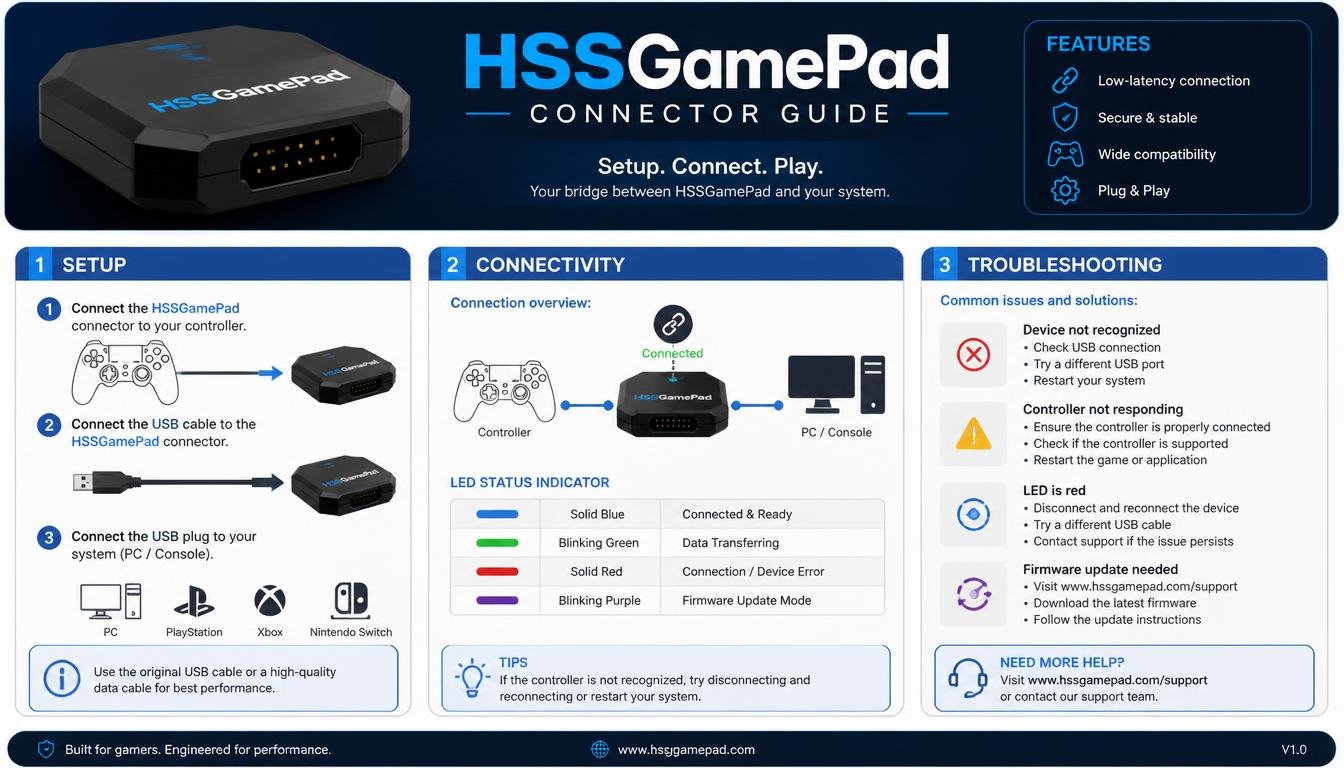
Connector HSSGamePad: Setup, Connectivity & Troubleshooting
The Connector HSSGamePad serves as a bridge for players looking to integrate their preferred hardware with various gaming platforms. Whether you are aiming to enhance your experience on a PC or seeking compatibility with mobile devices, understanding the nuances of this specific interface is essential. By mastering the setup process and addressing common connectivity hurdles, you ensure that your gaming sessions remain uninterrupted and responsive.
This overview provides the technical steps and troubleshooting strategies necessary to get the most out of your hardware, helping you maintain a consistent connection across all your favorite gaming devices.
Initial Configuration and Setup Steps
Getting the Connector HSSGamePad up and running requires a clear sequence of actions to ensure the hardware is recognized by your host system. Start by ensuring that the device has sufficient power, especially if you are using a wireless mode that relies on an internal battery.
If your unit uses a rechargeable cell, plug it into a reliable power source for at least two hours before the first attempt to pair. Once charged, toggle the power switch to the “on” position and look for the indicator light to begin flashing, which signals that the unit is in discovery mode.
For most users, the next step involves navigating to the system settings on your target device. On a Windows machine, you should open the “Bluetooth & other devices” menu and select the option to add a new device. Ensure your Bluetooth radio is active, as the system needs to scan the immediate area for the broadcast signal from your gamepad.
If you are using a wired configuration, the process is simpler: simply insert the USB cable into an available port on your computer. The operating system should automatically detect the new hardware and install the necessary drivers without further intervention.
Managing Wireless Bluetooth Connections
Bluetooth connectivity remains the most popular method for utilizing the Connector HSSGamePad due to the freedom from cables. To establish a stable link, keep the controller within three feet of the receiver during the initial handshake.
This proximity minimizes signal interference from other household electronics like routers or cordless phones. If the device fails to appear in your list of available hardware, force a hardware reset by holding down the designated pairing button for five seconds until the LED pattern changes.
Once the device appears on your screen, select it to initiate the pairing process. Some systems may require you to enter a PIN, though most modern game controllers use a secure auto-pairing protocol that bypasses this requirement. If the connection drops frequently, check for potential sources of electromagnetic interference nearby.
Moving your computer tower or console away from large metal objects can often stabilize the wireless signal significantly. Always ensure your controller firmware is up to date, as manufacturers frequently release patches that improve signal stability and device recognition.
Troubleshooting Persistent Connection Drops
When a controller appears to be connected but fails to register inputs in your games, the issue often stems from a conflict in the input API. Many games are optimized for specific standards, such as XInput, which is the default for most modern titles.
If your controller is defaulting to a legacy DirectInput mode, the game may not recognize your button presses even if the operating system shows the device as active. You can often toggle these modes on the controller itself by holding the “Home” or “Mode” button for a few seconds.
Another common culprit for connectivity failures is the presence of outdated or corrupted driver files in your operating system. Navigate to your device manager and check if the gamepad appears with a yellow exclamation mark, which indicates a driver error. You can right-click the device to update the driver automatically through the Windows update service.
If that fails, uninstall the device entirely, unplug the hardware, and restart your computer before plugging it back in. This forces the system to perform a clean installation of the communication protocols.
Optimizing Performance Across Different Platforms
The versatility of the Connector HSSGamePad allows it to function across various environments, including Android and specialized gaming consoles. When connecting to an Android device, you must ensure that your mobile settings allow for peripheral input.
Some tablets and phones have aggressive power-saving features that may throttle the connection to external controllers to save battery life. Disable any “Battery Optimization” settings for the gaming apps you use to ensure the controller remains active during long sessions.
For users transitioning between platforms, it is helpful to keep a record of which mode your controller is currently in. Using a simple table can help you track the required settings for each specific device, preventing confusion during your next session.
Read More: FeedWorldTech World Techie News by FeedBuzzard: What You Need to Know
| Platform | Connection Method | Primary Input API |
|---|---|---|
| Windows PC | Wired or Bluetooth | XInput |
| Android Mobile | Bluetooth | HID (Human Interface Device) |
| Legacy Consoles | Wired USB | DirectInput |
Addressing Input Lag and Signal Latency
Input lag can ruin the experience, especially in competitive titles where millisecond reactions matter. If you notice a delay between pressing a button and seeing the action on screen, your wireless connection is likely struggling with signal congestion. Try moving the Bluetooth receiver to a front-facing USB port on your PC case to reduce the amount of physical material the signal must pass through. If you are using a hub, disconnect it and plug the receiver directly into the motherboard, as hubs often introduce latency.
Another factor contributing to latency is the state of the system’s background processes. Ensure that your CPU usage is not being monopolized by unrelated applications while you are gaming. You can monitor this using the official Microsoft Windows support documentation regarding resource management.
By keeping your system resources clear, you allow the operating system to prioritize the input data stream from your controller. If the issue persists, switching to a wired connection is the only definitive way to eliminate the variable of wireless interference.
Managing Battery and Power Efficiency
Longevity is a key aspect of any wireless controller experience. To extend the life of your Connector HSSGamePad, avoid leaving the device on charge for extended periods after it has reached full capacity.
This prevents the battery from overheating and maintains its chemical health over the long term. If you notice the controller disconnecting frequently, it is often a sign that the voltage is dropping below the threshold required to maintain a stable Bluetooth handshake.
When you are not using the controller for an hour or more, manually power it down rather than letting it go into sleep mode. This practice saves a small amount of charge and ensures the device is ready to go when you return. If you find yourself playing for hours at a time, consider keeping a dedicated high-quality USB cable nearby.
Plugging in midway through a session provides a constant power flow and ensures you never lose control in the middle of a pivotal moment.
Frequently Asked Questions
Why does my controller show as connected but not respond in-game?
This usually happens because the game is looking for a different input standard than the one your controller is broadcasting. Try switching the controller mode by holding the Home button for three to five seconds, which often toggles between XInput and DirectInput modes.
Can I use this controller on multiple devices simultaneously?
No, a single Bluetooth controller can only maintain an active handshake with one host device at a time. To move the controller to a different machine, you must first “forget” the device on the current host or turn off its Bluetooth radio.
What should I do if the controller won’t pair at all?
First, ensure the controller is in discovery mode, which is typically indicated by a rapidly flashing LED. If it still doesn’t appear, restart the Bluetooth service on your computer or phone and try clearing the list of previously paired devices to remove any potential conflicts.
Is there a way to update the firmware on this hardware?
Yes, manufacturers often provide a small utility application on their official support website to update internal firmware. Download the appropriate tool, connect the controller via a wired USB connection, and follow the on-screen prompts to ensure your hardware is running the latest software.
Does the controller work with all PC games?
While most modern PC games support standard controllers, some older titles or specific indie games may require third-party emulation software. These programs map your controller inputs to keyboard and mouse commands, allowing you to use your hardware with virtually any title.
Maintaining Your Hardware for Longevity
Physical maintenance is just as important as software configuration when it comes to keeping your peripherals in top shape. Dust and debris can accumulate inside the analog stick housings, leading to “stick drift” or inconsistent movement registration. Use a can of compressed air to blow out any particles that may have collected around the base of the sticks. Never use liquid cleaners directly on the controller, as moisture can seep into the internal circuitry and cause permanent electrical shorts.
Store your Connector HSSGamePad in a cool, dry place when it is not in use. Avoid leaving it on the floor or in areas where it might be accidentally stepped on or exposed to direct sunlight.
If you have a carrying case, use it to protect the buttons and sticks from pressure during transport. Taking these small, consistent steps ensures that your controller remains a reliable companion for your gaming sessions for years to come.
Understanding how to manage your Connector HSSGamePad effectively allows you to focus on the game rather than the technology behind it. By following the steps outlined for initial setup, troubleshooting connectivity issues, and maintaining your hardware, you create a reliable foundation for your gaming hobby. Remember that most connection problems have a logical solution found within your device settings or through a simple hardware reset.
Whether you prefer the reliability of a wired connection or the convenience of Bluetooth, keeping your drivers updated and your environment clear of interference will help you stay in the action. We hope these strategies empower you to get the most out of your equipment and enjoy every moment of your gaming experience.





One Comment