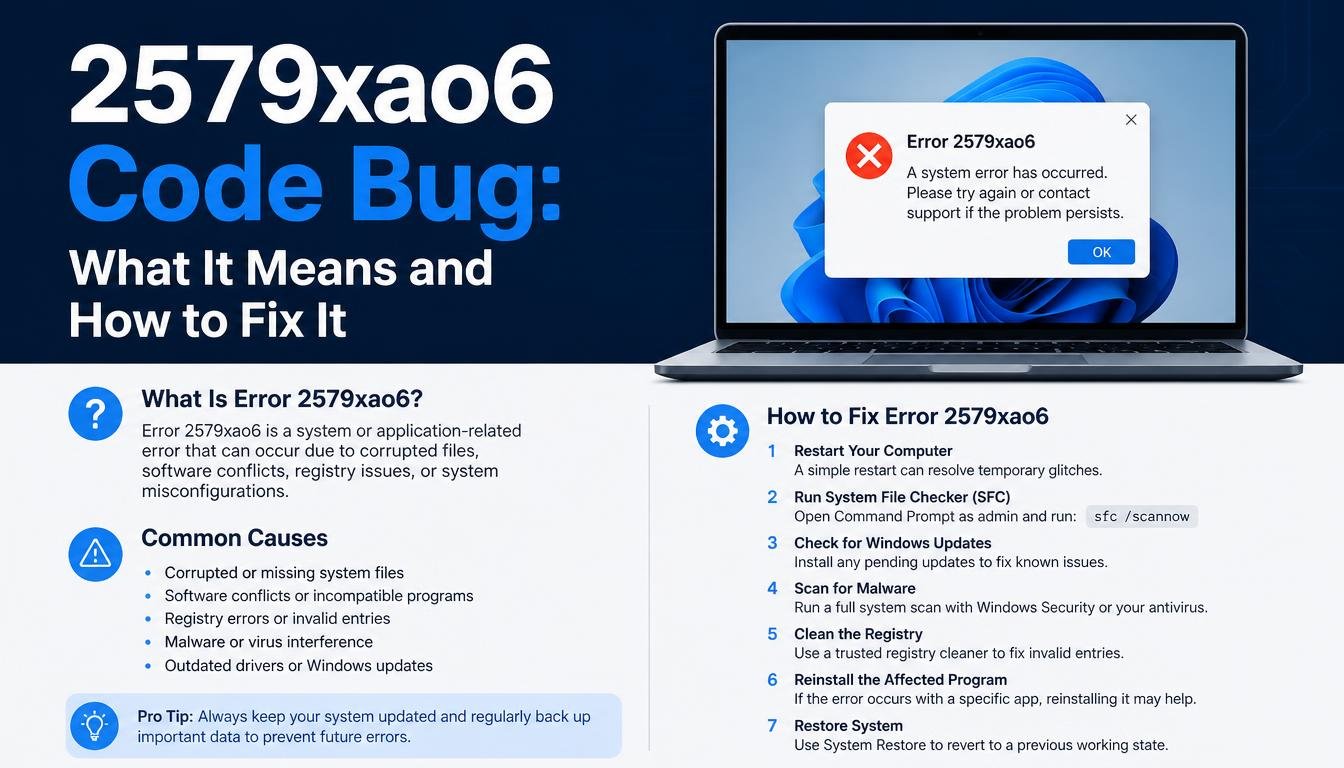
2579xao6 Code Bug: What It Means and How to Fix It
The 2579xao6 code bug is a specific technical identifier that often appears when a software application or a Windows-based process fails to execute a command correctly. When you encounter this error, it typically means the program has lost communication with a required dependency or a memory address has become corrupted during runtime. Understanding why this happens is the first step toward restoring your system to its normal state.
In this article, we will break down the mechanics behind the error and provide actionable steps to resolve the problem effectively. You will learn how to isolate the root cause and ensure your software runs smoothly without further interruptions.
Identifying the Root Cause of the 2579xao6 Code Bug
When a 2579xao6 code bug appears on your screen, it is rarely a sign of total system failure. Instead, it usually indicates a conflict between two pieces of software or a missing library file that the program expects to find.
Most users report seeing this notification after a recent update or when attempting to launch a legacy application that hasn’t received a patch in years. The code itself acts as a diagnostic flag, signaling that the execution pipeline has been interrupted by an unexpected exception.
You should first check the event viewer logs to see if the error is isolated to a single file path. Often, the error occurs because an antivirus program has incorrectly flagged a legitimate executable as a threat, preventing the software from accessing its own configuration files.
If you notice the error occurs immediately upon launch, it is highly likely that a file permission setting or a corrupted installation directory is the primary culprit. Pinpointing the exact timing of the crash provides the most reliable clue regarding which subsystem is failing.
Initial Steps to Resolve the Error
The quickest way to address this problem is to perform a clean restart of the affected service. Many code errors are transient, meaning they are caused by a temporary memory leak or a stalled background process that hasn’t cleared itself.
By restarting your computer, you force the operating system to flush the RAM and reload the necessary DLL files from scratch. If the error persists after a reboot, you are dealing with a persistent configuration issue that requires a more hands-on approach to fix.
Before attempting complex registry edits, try running the program in compatibility mode. Right-click the application icon, select properties, and navigate to the compatibility tab to see if an older version of Windows resolves the conflict. This is particularly effective for older programs that might be calling on deprecated APIs.
If the software still refuses to open, you may need to perform a repair installation through the control panel. This process replaces damaged binary files while preserving your personal settings and data.
Read More: What Is MoxHit4.6.1 Software About?: A Technical Breakdown?
Using Debugging Tools to Trace the Problem
For those who are comfortable with technical tools, using a debugger can turn a mysterious 2579xao6 code bug into a readable set of instructions. A debugger allows you to pause the execution of your program at the exact moment the error occurs.
This lets you inspect the stack trace and identify which specific function call is triggering the crash. If you are a developer or a power user, this is the most professional way to handle internal application failures.
If you aren’t a programmer, you can still use standard system diagnostic tools to gather information. For example, the Windows Resource Monitor can show you which files are being accessed when the error happens. If you see a file being locked or denied access, you have found your bottleneck.
You can learn more about managing these system resources and troubleshooting common software conflicts by visiting the official Microsoft documentation for system troubleshooting. This resource provides a deep dive into how various components interact within the Windows environment.
Common Scenarios Leading to the Bug
The 2579xao6 code bug frequently appears during specific operational scenarios. Understanding these patterns can help you prevent future occurrences. The following table highlights the most frequent triggers that cause this specific error code to surface during daily computing tasks.
| Trigger Scenario | Likely Cause | Recommended Action |
|---|---|---|
| Software Update | Incomplete file replacement | Reinstall the application |
| Memory Overflow | Excessive background tasks | Increase virtual memory or close apps |
| Security Software | False positive detection | Add exception in antivirus settings |
| Corrupt DLL File | System file degradation | Run SFC scannow command |
Each of these scenarios requires a different strategy. For example, an antivirus conflict is fixed by changing a setting, whereas a corrupted DLL file requires a system-level repair. Always verify the most likely cause before making significant changes to your system configuration.
Performing a System File Check
Windows includes a built-in utility designed to find and repair corrupted system files automatically. This is a highly effective way to handle the 2579xao6 code bug if it is caused by deep-seated OS issues.
To run this, open your command prompt as an administrator and type “sfc /scannow” followed by the enter key. The system will then scan every protected file on your drive and replace any that are found to be damaged or missing.
This process can take several minutes, so do not close the window while the progress bar is moving. Once the scan completes, it will provide a summary of the repairs made.
If the tool reports that it found corrupt files but could not fix some of them, you may need to use the DISM tool to repair the Windows image itself. Using these command-line tools is far safer than manually deleting files from the system folder, as they rely on official Microsoft verification signatures.
Checking for Software Compatibility Issues
Sometimes, the 2579xao6 code bug occurs simply because the software you are using is not optimized for your current operating system version. This is common when users upgrade their OS but continue using software that was designed for an older environment.
If the software hasn’t been updated in several years, the developers may have abandoned the code, leaving it incompatible with modern security protocols. In these cases, the error is an indicator that it is time to look for a modern alternative.
You should also check for driver conflicts that might be interfering with your applications. If you recently updated your graphics card or audio drivers, they might be using shared memory addresses that your software is trying to claim.
Keeping all your drivers updated via the manufacturer’s website is a fundamental practice for maintaining a stable environment. When hardware and software speak the same language, these types of cryptic error codes become significantly less frequent.
Managing Memory and Resource Allocation
If the error persists despite your best efforts, you might be looking at a memory allocation problem. When a program requests a block of memory that is already occupied or restricted, the system will throw an error to prevent a crash.
You can mitigate this by ensuring that your system has enough virtual memory, or “page file,” allocated. This allows the computer to use a portion of your hard drive as temporary RAM when the physical capacity is reached.
Additionally, consider disabling unnecessary startup programs that consume resources in the background. Many applications launch automatically when you turn on your computer, competing for CPU cycles and memory.
By limiting these background processes, you provide more room for your essential software to function without hitting the limits that trigger the 2579xao6 code bug. A leaner, cleaner system is always more resistant to these types of runtime interruptions.
Best Practices for Preventing Future Bugs
Maintaining a healthy system requires a proactive approach to software management. You should avoid installing “beta” or “nightly” versions of software unless you are testing them in a sandbox environment.
These versions are often riddled with unpatched bugs that can lead to constant system errors. Always stick to stable, released versions of software for your primary work machines to minimize the risk of encountering unexpected issues.
* Keep your operating system updated with the latest security patches.
* Use a reputable, lightweight antivirus program that doesn’t over-monitor system processes.
* Perform regular disk cleanups to remove temporary files that can cause conflicts.
* Back up your registry and important data before making major system changes.
* Only download software from official developer websites to avoid malicious installers.
Following these practices ensures that your system remains stable over time. When you do encounter an issue, you will have a clean, well-maintained foundation that makes troubleshooting much easier.
Frequently Asked Questions
Is the 2579xao6 code bug dangerous to my hardware?
No, this error is strictly a software-level issue. It does not pose a physical threat to your processor, motherboard, or hard drive, though it can be frustrating to deal with when you need to get work done.
Can I ignore this error if it only happens once?
If the error happens once and the program continues to work fine after a restart, you can likely ignore it. It was probably just a momentary glitch in the communication between your software and the operating system.
Should I reinstall Windows to fix this?
Reinstalling the entire operating system is almost never necessary for a single error code. You should exhaust all other options, such as running the system file checker and reinstalling the specific application, before considering a full system wipe.
Does this bug mean I have a virus?
It is unlikely. While some malware can cause system errors, the 2579xao6 code bug is typically associated with legitimate software conflicts or corrupted system files rather than malicious activity.
How do I know if my software is the cause?
If the error only occurs when you open one specific program, that software is almost certainly the cause. Try uninstalling and reinstalling it to see if the issue resolves itself.
Final Thoughts on Resolving the Bug
The 2579xao6 code bug is a manageable technical hurdle that most users can resolve by following standard diagnostic procedures. By focusing on system file integrity, software compatibility, and resource management, you can effectively clear the error and regain full functionality. Remember to take your time during the troubleshooting process and avoid making drastic changes to your system unless you have a full backup.
If you find that the error is tied to a specific piece of software, checking the developer’s forums or support pages is often the fastest way to find a permanent solution. Addressing these bugs as they arise helps you maintain a productive and efficient digital environment for all your daily tasks.





One Comment